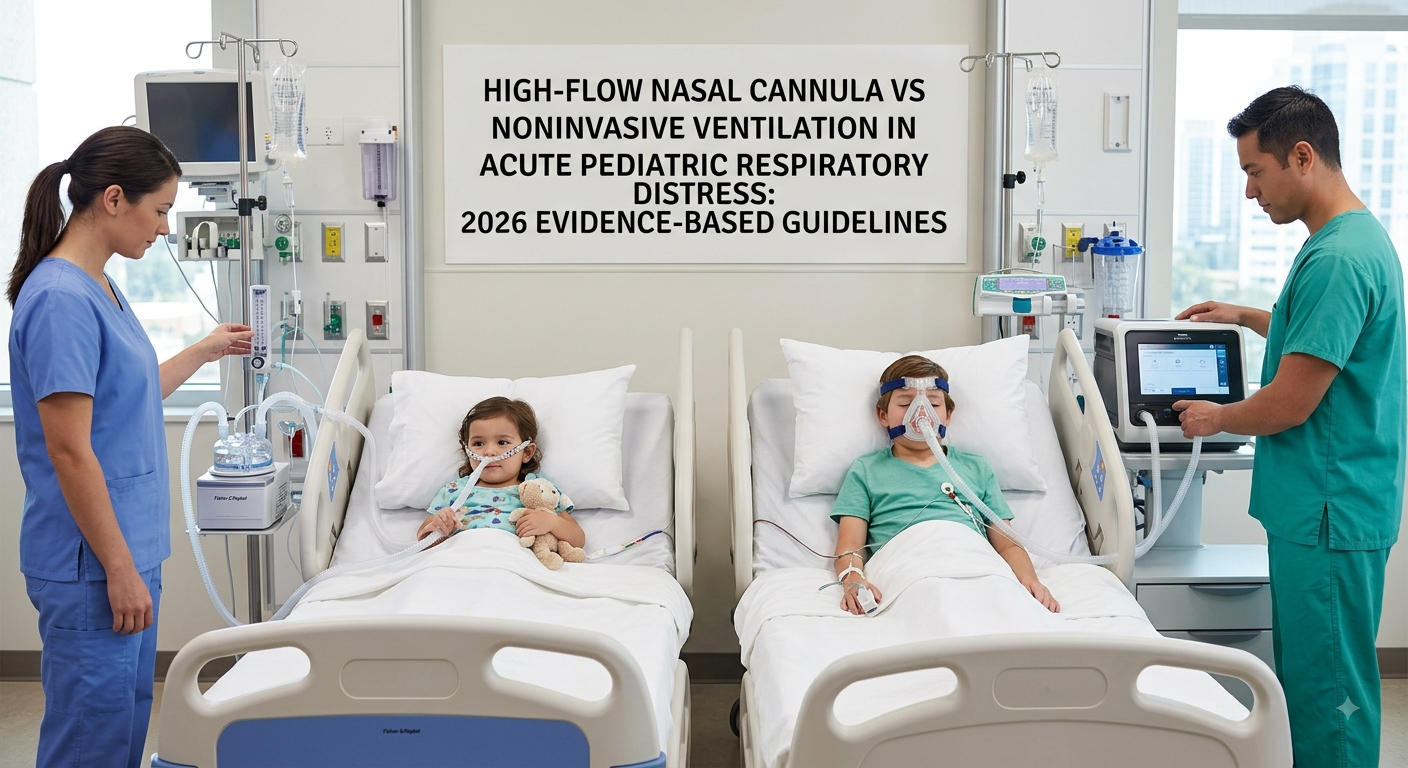
- Clinical Protocol: HFNC is the preferred first-line noninvasive support for pediatric acute hypoxemic respiratory distress due to superior comfort, safety, and intubation avoidance.
- Core Finding: Early HFNC significantly reduces PICU length of stay and invasive intubation rates, offering better patient tolerance and fewer complications than mask NIV.
- Actionable Protocol: Monitor HFNC response using the pROX Index (<4.88 at 2, 6, or 12 hours) to identify impending failure and guide timely escalation to NIV or invasive support.
High-Flow Nasal Cannula vs Noninvasive Ventilation in Acute Pediatric Respiratory Distress: 2026 Evidence-Based Guidelines
Acute respiratory distress secondary to severe bronchiolitis, viral pneumonia, or status asthmaticus accounts for a significant proportion of emergency hospitalizations and pediatric intensive care unit (PICU) admissions globally. Over the past decade, heated humidified high-flow nasal cannula (HFNC) therapy has evolved from a rescue modality into a frontline noninvasive respiratory support strategy. The 2026 pediatric clinical consensus updates provide revised, evidence-based recommendations comparing early HFNC application against traditional continuous positive airway pressure (CPAP) and bilevel noninvasive ventilation (NIV), balancing oxygenation efficacy, patient tolerance, and endotracheal intubation avoidance.
Physiological Mechanisms and Airway Dynamics
Both HFNC and NIV attenuate pediatric respiratory failure through distinct physiological pathways. HFNC delivers heated, fully saturated gas at flow rates exceeding the patient's peak inspiratory demand (typically titrated to 1–2 L/kg/min in infants and young children). This high-velocity gas flow generates a modest, dynamic positive end-expiratory pressure (PEEP) effect—ranging between 2 and 5 cmH2O depending on mouth closure—while continuously washing out anatomical nasopharyngeal dead space. The resulting reduction in dead-space ventilation enhances alveolar oxygen delivery, decreases upper airway resistance, and significantly reduces diaphragmatic work of breathing.
Conversely, NIV (delivered via nasal or oronasal masks) provides controlled, positive pressure support during both inspiration (IPAP) and expiration (EPAP). While NIV offers precise alveolar recruitment and CO2 clearance in severe hypercapnic respiratory failure, interface intolerance, mask-induced skin breakdown, and patient-ventilator asynchrony present frequent clinical barriers in infants and toddlers.
Clinical Efficacy and Intubation Rates: The 2026 Trial Evidence
Recent systematic reviews and multi-center randomized controlled trials evaluating pediatric acute hypoxemic respiratory failure demonstrate key comparative outcomes between HFNC and NIV:
- Endotracheal Intubation Avoidance: Early HFNC initiation significantly reduces the rate of invasive endotracheal intubation compared to conventional low-flow oxygen therapy (Odds Ratio = 0.55, p = 0.01), showing comparable intubation prevention rates to NIV in mild-to-moderate pediatric ARDS.
- ICU Length of Stay: Infants managed successfully on HFNC demonstrated a statistically significant reduction in PICU length of stay compared to those managed on mask NIV (Mean Difference = -2.76 days, p = 0.02), driven primarily by improved infant comfort, uninterrupted feeding capability, and reduced sedation requirements.
- Interface Tolerance and Complications: HFNC is associated with a markedly lower incidence of facial pressure injuries (<2% vs 18% in pediatric NIV cohorts) and lower rates of gastric distension.
Predicting HFNC Treatment Failure and Timely Escalation
Despite high overall success rates, HFNC failure—defined as the clinical requirement for advanced ventilatory escalation—occurs in 12% to 25% of severe pediatric respiratory distress cohorts. The 2026 consensus guidelines emphasize serial bedside monitoring using the Pediatric ROX Index (pROX = [SpO2 / FiO2] / Respiratory Rate).
A pROX index score <4.88 calculated at 2, 6, or 12 hours post-initiation serves as a validated early indicator of impending treatment failure. Persistent tachypnea, severe intercostal retractions, and refractory hypercapnic acidosis demand prompt escalation to mask NIV or invasive mechanical ventilation to avoid emergency periintubation cardiac collapse.
Summary and Practice Guidance
The 2026 pediatric respiratory guidelines establish HFNC as the preferred first-line noninvasive respiratory support modality for pediatric acute hypoxemic respiratory distress due to its superior patient comfort, safety profile, and intubation avoidance capabilities. However, clinicians must maintain rigorous, protocolized monitoring to identify non-responders early and safely transition high-risk patients to mask NIV or invasive respiratory support when indicated.
References
- Outcomes of early high-flow nasal cannula (HFNC) use in pediatric respiratory distress in acute settings: a meta-analysis. Eur J Pediatr. 2025.
- High-flow nasal cannula oxygen therapy in children: a clinical review and practice update. Korean J Pediatr. 2026.
- Canadian Paediatric Society Position Statement: Use of high-flow nasal cannula oxygen therapy in infants and children. Paediatr Child Health. 2026.
- Comparative Effectiveness of High-Flow Nasal Cannula Versus Non-Invasive Ventilation in Pediatric Post-Extubation Respiratory Support. Frontiers in Pediatrics. 2026.
Academic Collaboration & Consulting
Select a clinical research or writing service below to inspect deliverables and submit an immediate, direct inquiry to Dr. Rahul Parajuli.
Article Review & Literature Review
Rigorous scientific evaluation of medical literature and manuscript drafts. Providing structured peer-review quality assessments, methodology audits, and exhaustive literature mapping for prospective studies or clinical guidelines.
Key Deliverables & Methodologies:
- Critical Appraisal & Peer Review Reports
- Systematic Literature Search & Evidence Mapping
- PRISMA-compliant Literature Reviews
- Methodological Quality & Risk of Bias Assessment

Dr. Rahul Parajuli
Physician & ResearcherPhysician, Clinical Informatics Researcher & Health-AI Architect. Specializes in acute critical care telemetry, full-stack biomedical engineering, Schema entity graph architectures, and high-performance search systems.
Community Discussion
0 Contributions